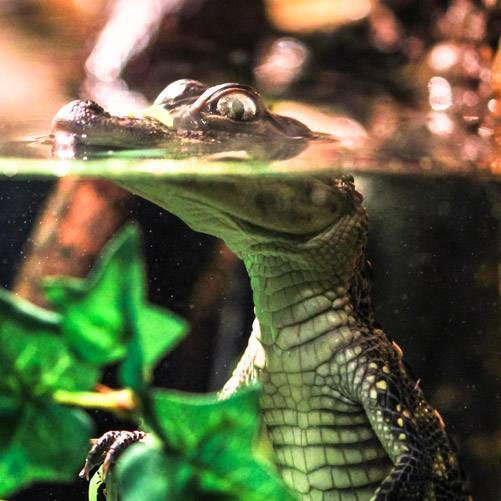
What Is a Giant Gourami and How Big Does It Get?
The giant gourami is one of the few fish that actually lives up to its name. With a body that can reach 70 centimeters, a lifespan of up to 20 years and the ability to recognize the people around it, this fish is one of the most underrated giants in the freshwater world.
What Is a Giant Gourami?
The giant gourami (Osphronemus goramy) is a freshwater fish native to Southeast Asia. It is found in the rivers, lakes and swampy areas of Indonesia, Malaysia, Thailand and Vietnam, where it has long been valued both as an aquarium fish and as a food source. It is one of the most deeply rooted species in the region’s fish farming tradition.
In most people’s minds, gouramis are small, colorful aquarium fish. The giant gourami is something else entirely. Same family, completely different scale.
How Big Does a Giant Gourami Get?
Unlike the gouramis most people have seen in aquariums, the giant gourami truly grows. Specimens exceeding 70 centimeters and 10 kilograms have been recorded in the wild. Reaching that size in captivity is rare, but you should still expect a fish somewhere between 40 and 60 centimeters.
Its body is flat and oval. Young fish are quite striking, with silvery grey bodies and horizontal golden yellow stripes. As they mature, these stripes fade and the coloring becomes more uniform. The fins are notably long and graceful, giving the fish a slow, gliding way of swimming.
A Fish That Breathes Air
One of the most fascinating things about the giant gourami is its labyrinth organ. In addition to its gills, this special organ allows it to breathe air directly from the surface. Seeing it rise to the top of the tank every now and then is completely normal and not a sign of anything wrong.
This feature allows it to survive in low-oxygen environments like swamps. That said, it does need regular access to air. If the gap between the water surface and the tank lid is too small, it can run into serious problems. Enough space above the waterline matters.
What Does a Giant Gourami Eat?
Giant gouramis eat both plant and animal-based foods. Young fish lean toward meat. Insects, worms and small aquatic creatures are high on the list. As they get older, their interest in aquatic plants, algae and fruit becomes much more noticeable.
In the wild, they have been observed waiting for fruit to fall into the water before eating it. Small pieces of banana or papaya are sometimes given in captivity too. The fact that they accept such a wide range of foods makes them relatively straightforward to keep.
Intelligence and Behavior
The giant gourami is widely known in the aquarium world for its intelligence. It has been observed recognizing its keepers and regular visitors, and adapting quickly to feeding schedules. The idea of a fish knowing who you are sounds unusual. But people who have worked with this species for a long time say it quite plainly.
It is generally calm and slow moving. Younger fish are more active, but as they mature they settle into a quieter character. Breeding season changes things. Males build bubble nests at the water surface and guard the eggs there. Taking direct responsibility for raising the young is not something you see in every fish species.
Territoriality is another known trait. During breeding season, males can become aggressive toward other fish entering their space. In a well-sized and properly arranged environment, this can be managed.
What Is an Albino Giant Gourami?
The albino giant gourami on display at Emaar Aquarium lacks the pigmentation found in typical individuals due to a genetic variation. They have a completely white or pale cream body and reddish eyes. Extremely rare in the wild, these fish are bred in controlled environments.
There is no difference in health or behavior compared to non-albino individuals. The one thing to keep in mind is that they are slightly more sensitive to light, so lighting setup matters a bit more for them.
With its white body and unhurried way of moving through the water, the albino giant gourami is one of the most eye-catching residents of the freshwater section. It tends to be one of the spots where visitors stop longest to take photos.
Its Place in Southeast Asian Cuisine
In Southeast Asia, particularly in Indonesia and Malaysia, the giant gourami is a well-known food fish. Known locally as “gurame,” it has been a part of regional cuisine for centuries. The tradition of raising it in rice paddies and garden ponds for its meat goes back a very long time. Few freshwater species have such a lengthy history in fish farming.
Giant Gourami at Emaar Aquarium
The albino giant gourami in our freshwater section draws consistent attention from visitors, both for its size and its unusual appearance. It is a genuinely enjoyable fish to watch. Plenty of people end up spending far longer in front of its tank than they expected.
Emaar Aquarium and Underwater Zoo is home to more than 500 species and over 20,000 animals. Alongside the giant gourami, you can also encounter other freshwater giants in the same building. Asian arowana, Motoro ray, Pacu and red tail catfish are all waiting, Motoro ray, Pacu and red tail catfish.
Frequently Asked Questions
How big does a giant gourami get?
Specimens exceeding 70 centimeters and 10 kilograms have been recorded in the wild. In aquarium settings, they typically stay between 40 and 60 centimeters.
How long does a giant gourami live?
Under good conditions, up to 20 years. That is a genuinely long lifespan for an aquarium fish.
Is a giant gourami aggressive?
Generally calm. Males can show territorial behavior during breeding season, but this is temporary.
Why does my giant gourami keep coming to the surface?
It has a labyrinth organ that lets it breathe air directly. Coming to the surface is normal behavior and nothing to worry about.
Is there a difference between albino and normal giant gouramis?
In terms of health and behavior, none at all. Albino individuals are simply more sensitive to light.